
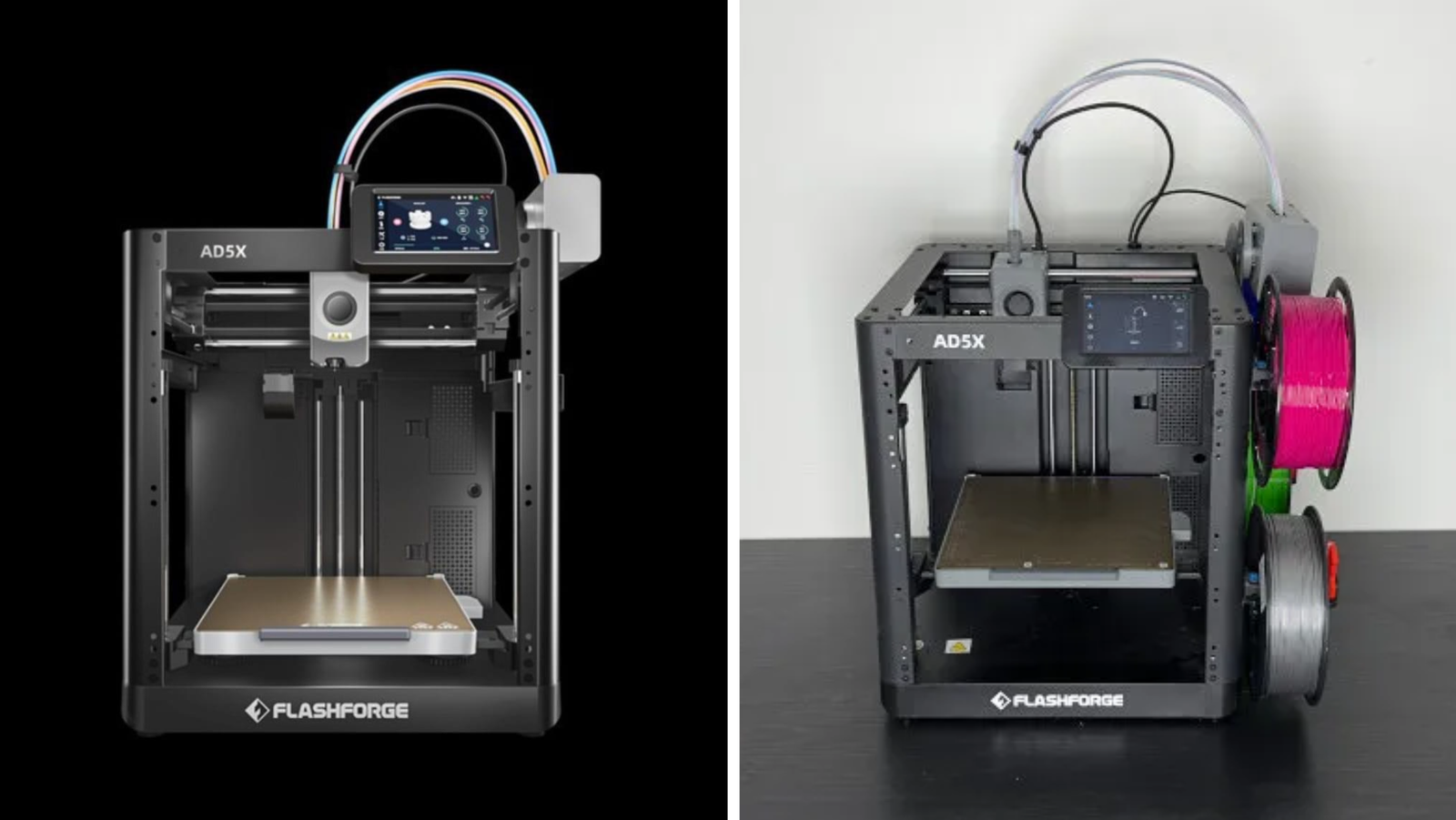
The FlashForge Adventurer 5X (AD5X) represents a significant leap forward in the Adventurer printer lineup, combining the proven reliability of its predecessors with groundbreaking multicolor printing capabilities. This mid-range 3D printer stands out by introducing 95A TPU multicolor printing—a feature previously unavailable in the Adventurer series—paired with impressive speed capabilities, automatic filament management, and user-friendly operation. Whether you’re a seasoned maker exploring multicolor possibilities or a production-focused user seeking efficiency gains, the AD5X delivers compelling value across its feature set.
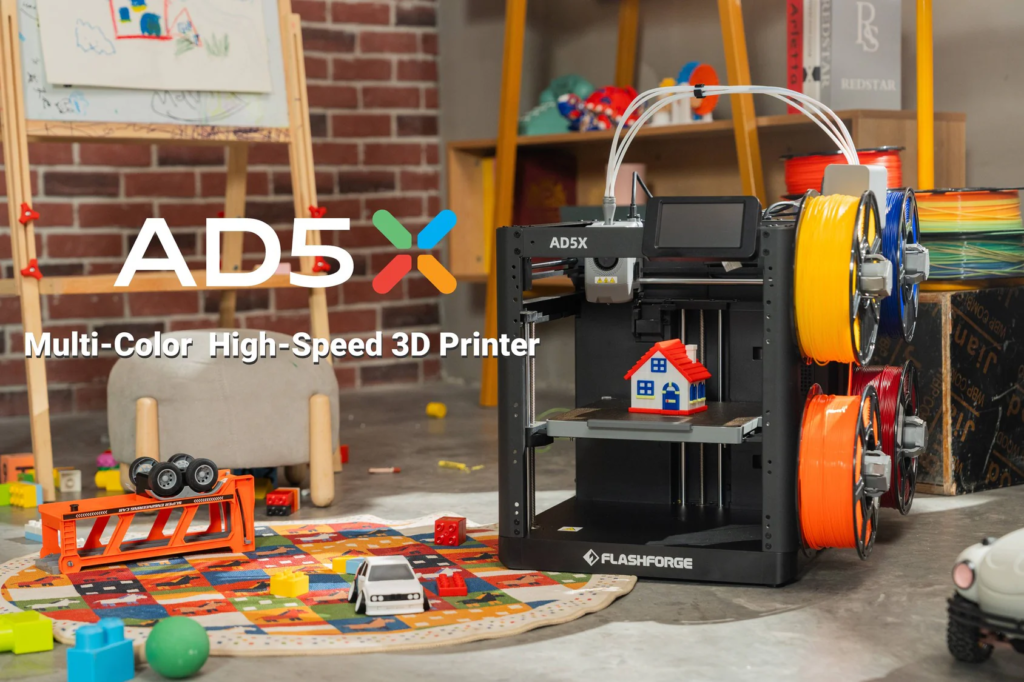
Key Features & What Makes It Special
Multicolor & Multi-Material Excellence
The headline innovation is undoubtedly the Intelligent Filament System (IFS) module, which enables seamless switching between up to four different filaments or colors during printing. Unlike traditional manual filament changes, this system operates automatically—you simply load your spools and let the printer manage the transitions. The real game-changer, however, is the compatibility with 95A TPU (flexible thermoplastic polyurethane), something Flashforge has never achieved before on their consumer-grade machines. Testing confirmed this works remarkably well, opening entirely new creative possibilities for flexible multi-colored components.
Impressive Speed & Precision
The CoreXY motion system remains unchanged from the AD5M, but the AD5X pushes performance to 600 mm/s travel speeds and 300 mm/s printing speeds, with acceleration reaching 20,000 mm/s². In practical testing, these speeds are genuinely achievable—not just marketing hype. The CoreXY architecture keeps inertia low, vibration minimal, and precision sharp, which means you’re getting detailed, consistent prints even at elevated speeds. For production users, this matters significantly.
Automatic Leveling & Build Quality
The one-click automatic leveling system with pressure sensing technology eliminates the frustration of manual Z-axis calibration. The flexible PEI steel sheet accommodates PLA, PETG, TPU, and other materials, while the heated bed reaches 110°C for reliable adhesion and minimal warping. The build volume remains the familiar 220 × 220 × 220 mm—not the largest, but ample for most maker projects and small production runs.
Practical Smart Features
Automatic filament refill means when one spool depletes during single-color printing, the system seamlessly switches to the next one. The 99% power outage recovery success rate is genuinely valuable if you’ve ever experienced a mid-print failure. The quick-release nozzle design saves approximately 30% on replacement costs compared to full-head replacements, reducing operational expense over time.
Straightforward Setup
Out of the box, assembly requires merely three steps: installing the screen, filament holder, and multicolor module. This isn’t a complicated build; within minutes, you’re ready for your first print. Flashforge provides clear packaging, thick protective foam, and everything arrives in excellent condition.
Detailed Advantages
Exceptional Value Proposition
The AD5X brings advanced functionality typically found on premium-tier machines at a significantly accessible price point. Multicolor printing, automated filament management, and 300°C nozzle capability usually demand substantially higher investment. This printer democratizes those capabilities.
Reliable Workhorse Mentality
Extended testing revealed over 200 hours of operation without degradation or wear. Components are straightforward to access and replace. The rigid steel frame with linear rods throughout provides the build quality expected from Flashforge’s trusted heritage in the Adventurer series.
Excellent Print Quality
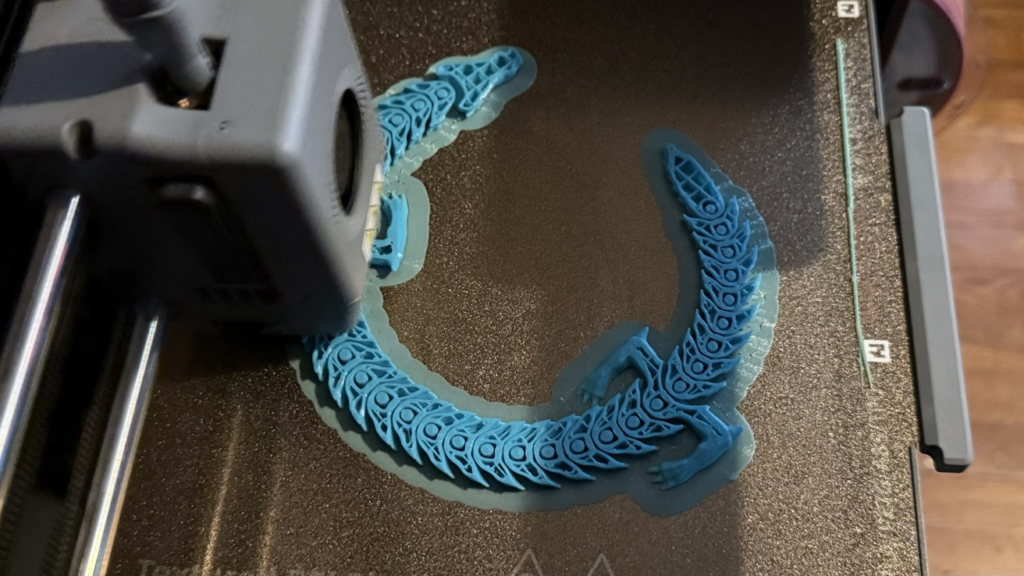
Real-world test prints demonstrated accuracy to within 0.02 mm on dimensional targets and impressive surface quality across PLA, PETG, and TPU materials. The clean multicolor transitions—with minimal color bleeding—showcase how effectively the nozzle cleaning between color changes works in practice.
Intuitive Software Experience
The Orca-Flashforge slicer is straightforward and effective. The printer’s interface is accessible enough for newcomers but capable enough for experienced users optimizing specific parameters.
Notable Limitations & Honest Drawbacks
Excessive Material Purging During Color Changes
This is the most significant operational frustration. During multicolor prints, the printer purges extensively between material changes—in tested examples, over 1.75 kg of TPU was wasted for a 150-gram finished print, with purging occurring more than 15 times for a single layer change. This appears to stem from a firmware misinterpretation of slicer purge sequences and desperately needs addressing through a firmware update. Until resolved, multicolor TPU printing becomes relatively expensive per printed item.
Elevated Noise Levels
The open-frame design results in higher noise than the AD5M Pro, averaging 72 dB with peaks reaching 80 dB. This isn’t dangerously loud, but it’s sufficient to make sustained operation in shared workspace uncomfortable. If noise is a concern, plan printer location accordingly or use sound-dampening measures.
Limited Material Compatibility
The open-frame design (intentional for thermal control and accessibility) restricts printing with high-temperature engineering materials like ABS, ASA, PA, or PC without environmental enclosure additions. Practically, this limits the AD5X primarily to PLA, PETG, and TPU—which covers the vast majority of maker and consumer applications but is worth noting if you’re considering engineering-grade materials.
Build Volume Constraints
At 220 × 220 × 220 mm, this is a standard-sized build platform, not a large format machine. Projects exceeding these dimensions require either multiple prints or larger printer investment.
Software Limitation
Currently, the AD5X exclusively supports Orca-Flashforge rather than open-source Orca Slicer. While Orca-Flashforge is capable, this proprietary approach limits workflow flexibility if you maintain standardized multi-printer pipelines using open-source software.
Who Should Consider This Printer?
The AD5X excels for makers exploring multicolor printing, product designers prototyping flexible components, hobbyists seeking reliability with creative flexibility, and small production operations requiring dependable multicolor output. It’s an ideal stepping stone from single-material printing toward more sophisticated fabrication.
Conversely, this printer isn’t optimal for those exclusively printing engineering materials, requiring maximum build volumes, or prioritizing silent operation in shared spaces.
Final Verdict
The FlashForge AD5X successfully achieves what Flashforge intended: bringing multicolor and multi-material printing within reach of creators without requiring significant financial commitment or operational complexity. The proven CoreXY motion system, combined with genuine speed capabilities and the innovative IFS module, creates a compelling entry point into multicolor fabrication.
The excessive purging issue, while present, appears resolvable through firmware updates and represents a software problem rather than hardware limitation. The increased noise and material limitations stem from intentional design decisions that make the printer accessible and capable for its target market.
For enthusiasts and professionals wanting to explore multicolor printing, flexible material compatibility, and reliable automated operation without premium pricing, the AD5X delivers genuine value. It’s a well-considered engineering effort that successfully marries innovation with proven reliability—exactly what today’s maker community needs. This printer earns strong recommendation for its category.
Learn More: Enjoy Extra $5 Off Official FlashForge Website (flashforge.com) With This Exclusive Coupon Code: VIPSALE5
Rating: 8.5/10 – A genuinely capable multicolor solution that democratizes advanced printing capabilities, tempered only by firmware purge optimization requirements and inherent design tradeoffs.
Also, Read The Following: Eloise Mumford Husband.

